Acknowledgement
I am retaking this course and have been granted permission to reuse my original assessments from my previous enrollment. This submission is my original work, created during my prior attempt, and is being resubmitted per the instructor’s guidance. I have made minor modifications to this assessment to reflect updated guidelines, course expectations, and feedback from my previous attempts.
I understand the importance of academic integrity and transparency, and I am submitting this assignment with full acknowledgment that the content may reflect similarity to work previously submitted through Turnitin or other academic integrity systems. Thank you for your consideration.
Problem of Practice Needs Assessment
Learner and Specialization Information (to be completed by the learner)
Learner Name | |
Learner E-mail | |
Learner ID Number | 2517927 |
Instructor Name | Dr |
Specialization | Adult Education |
Specialization Program Director Name | |
Specialization Program Director E-mail | |
Name of Project Site | North Las Vegas Chapter, Lions Club International |
Name of Person Giving Authorization to Use Site | Willie Fields, Jr. |
Type of Organization | Community Service |
Learner Role at Site | Member/Volunteer |
APPROVED BY INSTRUCTOR Name & Date |
Overview of the AIP Model
The Applied Improvement Project (AIP) will establish problem solutions through recommended actions for organizational improvement. The AIP model contains three phases, which include a total of 10 steps. The three phases are as follows: planning, implementation, and evaluation (refer to Figure 1). In the phase 1 “planning”, the applied researcher will provide comprehensive details to diagnose the problem and also generate alternatives and an action plan. In the phase 2 “implementation”, the action plan will be executed to address the identified problem. In the phase 3 “evaluation,” data collection and analysis will take place to evaluate the effectiveness of the proposed intervention. Further, the project findings will be conveyed to stakeholders to enable the project findings to be disseminated.
Figure 1
Applied Improvement Project Model
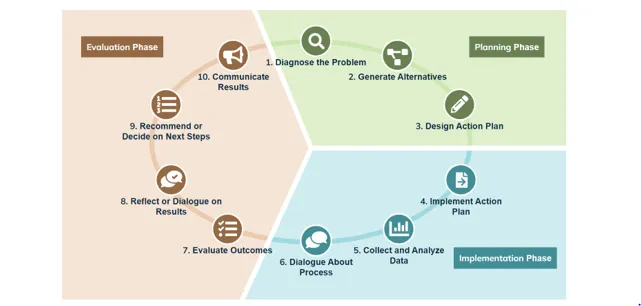
Note. This figure shows the three major phases of the Applied Improvement Project Model and how the ten steps of this model were completed within the Advanced doctoral courses. The shaded sections resemble the three major phases, the circular icons resemble the ten steps, and the line between the icons resembles the connection between each step within the appropriate phase. Retrieved from https://media.capella.edu/CourseMedia/edd8522element20223/wrapper.asp. Not in the public domain.
The organizational problem will be diagnosed and managed through a systematic approach that uses the AIP model. Step 1 of the AIP model serves as the main focus of the signature assignment, as deals with problem diagnosis. Step 1 leads to the precise identification of the root cause and underlying problem. The goal is to develop a comprehensive understanding of the problem, the reasons for its occurrence, and the possible effects. The diagnostic findings will direct the next actions within the AIP model framework. Using the model in the Doctor of Education program helps in organizational problem management while creating a connection between the AIP model and Advanced Doctoral Courses.
Preliminary Site Information
The research project site is a worldwide non-profit organization headquartered in Oak Brook, Illinois, United States. The organization is committed to improving the youth’s access to quality education.Other domains on which the organization is working globally include health improvement, disaster management, and youth development programs. One of the biggest initiatives for youth is Social Emotional Learning (SEL) program administered in cooperation with thousands of schools around the world.There is a history of SEL at this site, but it comes from a very large initiative-grades wide, all concerned to deal with rising issues of bullying, chronic absenteeism, and student academic performance.Thus, the SEL is supposed to improve the students’ academic performance by enhancing their social skills and emotional intelligence. The expectations mandated by the school district and site principals for focusing on emotional regulation-making decision-building positive peer relationships. The stakeholders are not recruiting educators to implement the SEL program. Not implementing the SEL program increased the student absenteeism rate, which directly impacts academic performance directly.
The organization supports schools in so many contexts. These schools typically serve between 300 and 1,500 students, but differ widely in the demographic makeup by region. Also, the student demographics often reflect the wider community. The organization provides education to students of various ages and backgrounds, such as elementary, middle, and high school students. The organization has teaching staff to implement the SEL program for high school students. Teacher demographics vary, but most schools have between 25-75 educators trained in organization. Schools implementing SEL program are quietly distributed across urban, suburban, and rural areas. Many schools cite concerns about student behavior, bullying, and mental health, which makes SEL programs essential for creating a positive school climate environment for student academic success.These schools with organization partnerships implement SEL program to ensure an environment that is conducive, safe, inclusive, and academically supportive for students from all backgrounds. The site advocates for implementing the SEL programs to improve the achievement rate of the students through the establishment of a positive school culture that fosters diversity and inclusiveness among students.
Role in or Relationship with the Organization
The applied researcher’s specific role is participation in the program implemented by the organization to deliver SEL education to students. The applied researcher worked as volunteer who participates in the program to raise awareness of the SEL program for the students. The applied research is connected to the organization and is responsible for planning, implementing, and assessing SEL instruction for students at one of the school of organization. In addition, the researcher also plays a role in conducting student support services, including SEL programs. The applied researcher thinks the initiatives are a part of the mission-driven organization to improve the student achievement rate. The site has a hierarchical structure due to board members, allowing all employees to express the viewpoints regarding the management of the organization’s issues.
The applied researcher has a critical role to play in the problem of staff shortages impacting the delivery of SEL by pointing out the gaps in the delivery of SEL programs due to a lack of staff. Developing strategies to integrate SEL practice into curricula with less staff is challenging. Assessing the effectiveness of SEL delivery models and advocating for additional staffing for implementing SEL programs is necessary. The applied researcher role has a direct relationship to enhancing student academic performance and well-being by ensuring SEL programs remain accessible and effective despite staff shortages.
Financial challenges and personal difficulties, together with academic challenges, can cause potential conflicts of interest. Such situations appear when researchers have monetary interests in research outcomes. For instance, the funding request for SEL services might result in reduced resources for educational programs. The applied researcher’s ownership of shares in the benefiting organization may affect the ability to remain objective when conducting research. Research decisions made by the applied researcher could become biased because of personal relationships. When applied researchers conduct studies with persons who are family members or close friends, then personal relationships can influence both research findings and decision-making processes. Academic conflicts develop when researchers advocate for funds to conduct the education session. Unbalanced implementation of SEL by researchers could potentially lead to neglecting academic priorities. The requirement to yield favorable findings may influence the researcher to report biased information or perform data modification.
Using effective approaches to mitigate potential conflicts of interest is pertinent. Firstly, disclosing all financial, personal, and academic interests before initiating the research helps in avoiding personal influence on research. Enlisting the finance required to implement the SEL program helps in garnering support and mitigating the financial risks. Also, the revelation of the personal relationships and affiliation to the site leadership mitigates the risk associated with personal affiliation. Secondly, avoid involving close family or friends to maintain research integrity. Involving third parties who have no influence on the project would help in mitigating the risk that threatens the research integrity. The third parties ensure transparency at all levels to provide accurate data. Thirdly, the use of rigorous protocols for data collection, analysis, and reporting helps in reducing the applied researcher bias in the findings. Protocols like data auditing through people who have no connection with the project will conduct the analysis to ensure transparency and credibility of findings.
Statement of the Organizational Issue
The local organizational issue at the research site is the ineffective implementation of SEL programs for students, affecting academic performance. The organizational issue impacts the students because the ineffective implementation of SEL hinders students to learn emotional regulation, conflict resolution, and stress management capabilities.
The ineffective implementation of the SEL program in one of the school of the research site affect the students’ academic performance. As the research site is a vast organization and affiliated with different schools, thus, the research project will be applied to one of the school served by the research site. Not conducting educational sessions for developing emotional intelligence, self-regulation, and conflict-resolution skills affects the student’s academic performance (Shengyao et al., 2024). Students who lack SEL education fail to manage stress and making students prone to poor achievement scores.
Data and Evidence
Staff shortages within organizations have a detrimental impact on the successful implementation of SEL programs. The delivery of structured lessons and student support needs trained staff who will also reinforce social-emotional skills in students. Staffing shortages within educational institutions compel administrators to address the issue as a priority for implementing the SEL program (Project manager, personal communication, September 15, 2024). The absence of dedicated staff who would implement SEL programs results in students’ low academic outcomes, which directly affects educational success. The performance gap through gap analysis is identified and provided in Appendix A.
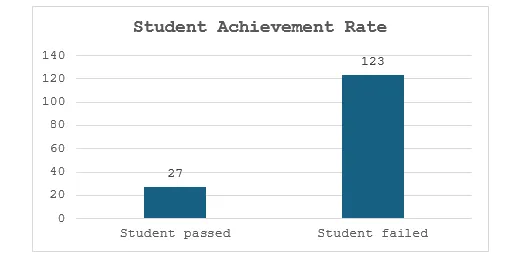
The data on student achievement rates for conducting the SEL program provide substantial evidence for advocating the organization’s issue. Figure 2 provides data regarding student achievement rates among 8th-grade students who were in the SEL program for the 2023–2024 academic year. Student achievement was assessed through SEL skill assessments, including problem-solving scenarios instituted by the teachers. The SEL skill assessments were utilized to measure the ability of students to show self-awareness, social skills, and emotional regulation. Out of a random sample of 150 students, only 23 students were able to score proficiently within one year in the SEL program (Project Manager, personal communication, September 15, 2024). Thus, the particular assessment was directly linked to the ineffective SEL implementation, and the majority of students with low scores did not receive the SEL education. The key variables were the student achievement rate (dependent variable) and the student participation in the SEL program (independent variable). To draw a relationship between variables, the student achievement rate for 8th-grade students was assessed based on the student attendance in the SEL program. Thus, the variables build up a detailed case to argue that the relationship in fact exists.
Figure 2
Student’s Achievement Rate
Further data from the organization revealed organizational performance problems due to inadequate training for designing SEL programs. Thus, the problem arises due to the inadequate training hampering the staff from delivering SEL programs, and untrained educators lead to negative impacts on student academic results. Ineffective coordination exists because insufficient collaborative resources hamper the creation of the SEL program for the students (Project manager, personal communication, September 15, 2024). The site has created a SEL program to improve the social skills and emotional intelligence of the students. Student academic performance requires improvement through the implementation of teacher training for conducting the SEL programs.
Potential Root Causes
Appendix A demonstrates the key performance gap that affects student academic outcomes. The lack of an optimal allocation of financial resources is the first performance gap that hinders the implementation of the SEL program and leads to a negative impact on student academic outcomes (McCoy & Hanno, 2023). A second gap in performance is the lack of collaboration between the staff to design a SEL curriculum. The third performance gap is the lack of a feedback system that hinders teachers from addressing the need for SEL programs to enhance student academic performance.
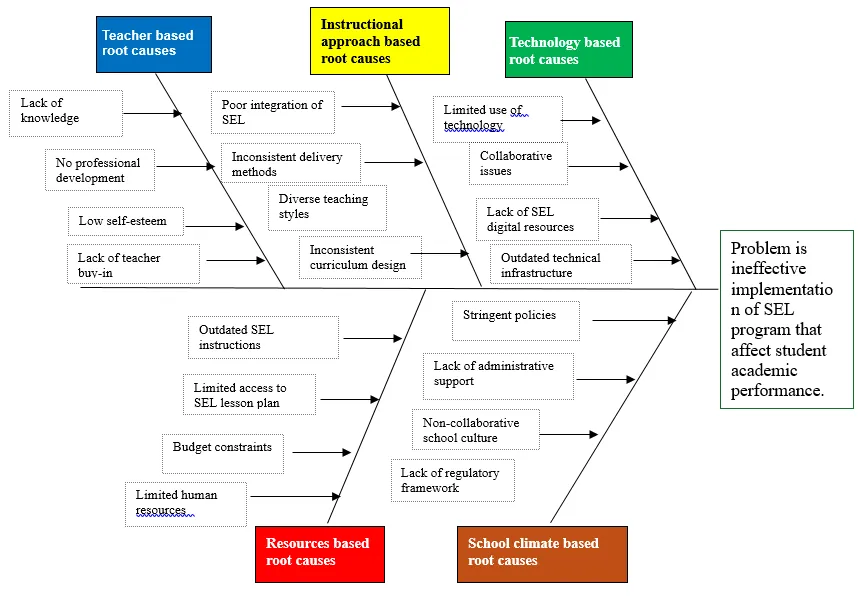
An Ishikawa Root Cause Analysis entails that the key roots of the problem are provided in Appendix B. The root causes main domain include teacher-based (person), resources-based (material) instructional approach based (method), technology-based (machine), and school climate-based (environment). Firstly, the teacher-based causes include the lack of knowledge, no professional development, low self-esteem, and staff shortage (Project manager, personal communication, September 15, 2024). Thus, the staff shortage and lack of knowledge hinder the implementation of the SEL program, which negatively impacts student academic performance (Stevenson et al., 2020). Secondly, the instructional approach-based causes include poor integration of SEL programs, inconsistent delivery methods, diverse teaching styles, and Inconsistent curriculum design that create obstacles for SEL programs and produce sustained academic downturns for students (Project Manager, personal communication, September 15, 2024). Thirdly, technology-based root causes include limited use of technology, collaborative issues, lack of SEL digital resources, and outdated technical infrastructure, which hamper the research site from developing a standardized SEL program (McCoy & Hanno, 2023). Additionally, the collaboration issues due to limited use of technology also impact the development of the SEL program (Huynh et al., 2021). Fourthly, the resource-based causes include Limited human resources, budget constraints, outdated SEL instruction, and limited access to SEL lesson plans. The school climate-based causes include stringent policies, lack of administrative support, lack of regulatory framework, and a non-collaborative school culture also lead to ineffective implementation of the program (Project manager, personal communication, September 15, 2024). Ishikawa root cause analysis provides insight into the different root causes of the five domains that lead to local organization issues at the project site.
Organizational Context Analysis
The organization is a global humanitarian foundation that works in health, youth development, and education. The ineffective implementation of the SEL program has been an organizational problem within LICF due to various reasons. The organization efforts for implementing the SEL program are approved by the district, but inconsistent implementation at the site is ascribed to limited administrative oversight, competing academic priorities, budget constraints, and staff shortages. The inconsistency in implementing the SEL programs directly impacts student performance (Dowling & Barry, 2022a). The student achievement rate is currently at 5%, and the site’s benchmark is 11%, which indicates the need for effective measures to enhance the academic performance of the students.
The Problem and History
For some years now, the institution has recognized SEL as a good way of improving student outcomes, but implementation has always paused due to a lack of resources and staff shortages. Staff shortages hindering the implementation of SEL programs have been a problem for the organization (Berg et al., 2021). To counter the staff shortage problem, organizations recruited more staff for the SEL program. But the lack of coordination between the staff and school administrators hinders the implementation of the SEL program (Ramirez et al., 2021). Thus, the past efforts to increase the staff were unsuccessful, thus rendering inconsistent implementation. Another initiative to resolve the problem was the teacher training regarding the SEL program. The effort was unsuccessful as the training consumed extra time and pressure was placed on the workload of existing teachers, which impacted the implementation of the program.
The Organization’s Mission and Values
From a vision perspective, the institution supports to implementation of the SEL program to empower students with the social skills along with emotional intelligence, which play a positive role in improving academic performance. The site’s mission is to improve the social-emotional skills of students by implementing the SEL program. Tackling educational inequity by offering targeted SEL learning services to students to make sure all learning experiences are relevant (Ramirez et al., 2021). Organizational values include an emphasis on diversity principles to deliver education to all students. Respecting the diversity principles helped in developing a positive learning environment in schools (Roldán et al., 2021). Thus, the organization is promoting partnerships with local schools to ensure the provision of educational services beyond the conventional classroom. Educational institutions’ partnership with community agencies added value to the educational experience and provided comprehensive support to students to engage in the SEL program.
Organizational Factors that Support or Hinder the Improvement Project
Some of the organizational factors that support the improvement project are upfront investment and modification in the educational policies to foster a learning environment. Support from management acknowledged the training of staff to integrate the SEL program. Awareness of the staff about the significance of the SEL program will act as a supporting factor (Grant et al., 2023). An environment that fosters discussions among the stakeholders greatly affects the project. Insights and perspectives regarding the policies also help shape the direction and outcomes of the project. However, some organizational factors hinder the implementation of the improvement project. Competing interests of the different departments within the organization act as barriers to making changes in the educational program (Dowling & Barry, 2020a). On the other hand, another barrier is the lack of a teacher professional training program, which eventually stands against the site’s mission to foster an SEL learning environment.
Assumptions of the Organizational Issue by Administrators and Stakeholders
School administrators assume that SEL is secondary to instruction and, therefore, gives inconsistent support in implementation. Also, administrators assume that current staff assume that extra resources are needed to integrate the SEL program into the present curriculum (Sandilos et al., 2022). Other stakeholders include the educators who rely heavily on the assumption that educators do not need to collaborate with the other staff to develop plans to integrate SEL into current curricula. However, the assumption fails to recognize that staff may possess varying levels of obstacles to integrating changes, which contributes to poor academic performance.
Teachers, as stakeholders, assume that the shortage of staff is a significant barrier to the implementation of the program. Thus, the staff shortage leads to the assumption among teachers that implementing a new program may not be sustainable in the long run (McCoy & Hanno, 2023). Leadership assumes that SEL may not influence the student’s academic performance. Thus, the leadership does not advocate for further funding and staffing for SEL programs, which affect the student learning outcomes.
The Organization’s Political, Social, and Economic Culture
The organization’s efforts to integrate the SEL program by recruiting staff impacted by political, social, and economic factors. In an economic context, the varying demographic and socioeconomic backgrounds of students shape the demand for SEL programs (Mondi & Reynolds, 2020). For example, schools located in urban communities provide more emotional and behavioral support for students who belong to low-income families. In a social context, some families may resist the introduction of new techniques in favor of traditional forms of education. Schools’ collaboration with community agencies proved efficacious in attracting resources and support for SEL programs (Tiska et al., 2021). Also, a positive overall school climate influences the efficacy of SEL integration and improves teacher-student relationships.
In a political context, the evolution of the legislature governing funding for education and support services affects the availability of resources for improvement activities (Shi & Cheung, 2024). The school administrator considers district policies that influence the allocation of funding and staffing decisions. Additionally, the teacher contracts and curriculum mandates often dictate administrative priorities that restrain SEL implementation (Dowling & Barry, 2020a). Considers the diverse factors that help in integrating the SEL program in the curriculum to empower the social skills and emotional intelligence in the students.
Scope and Significance of the Organizational Issue
The local organizational issue at the research site is the ineffective implementation of SEL programs for students, affecting academic performance. The lack of an SEL program directly impacts student performance. In the absence of appropriate staff required for the implementation of SEL programs in school, directly affects the student’s academic performance (McCoy & Hanno, 2023). The student achievement rate is currently at 5%, and the site’s benchmark is 11%, which indicates the need for effective measures to enhance the academic performance of the students. The scope involves examining the different cavities, processes, and people to improve the learning environment for students. As such, the SEL program is really important in improving emotional intelligence and social skills, which are a prerequisite to enhancing students’ performance.
The significance pertains to implementing the SEL program by conducting staff training. The concerned sub-groups, including the team leaders, educators, administrators, and financial personnel, will be engaged in the key activities to implement the SEL program. Also, the importance of the problem can determine the overall effectiveness of an organization and the actions that must be taken to meet set goals. Not mitigating the organization’s issue of staff shortage adversely impacts the student outcomes academically, thereby affecting the organization’s performance (Gimbert et al., 2021). Thus, the significance lies in nurturing a culture of accountability and continuous improvement, which are essential for a successful SEL program implementation.
Number of People Impacted by the Project
With respect to the potential impact of the program, an immediate and direct impact is on the 300 -1500 students population. For instance, ineffective implementation of the SEL program hinders students to learn the social skills and emotional intelligence, impacting the academic performance (Dowling & Barry, 2020b). A pertinent group affected by the problem is the families who look to schools to offer SELs, in particular, for students struggling with emotional and behavioral difficulties. The educators are another group comprising 25-75 people impacted by the project as staff shortages affect the implementation of the SEL program, raising questions about educators’ credibility and qualifications (Dyson et al., 2023). Also, the effects would be seen on the school administrators encountering the staffing shortages challenges. The resource constraints inhibit administrators from making better use of program SEL resources to meet students’ needs.
Impact on the Organizational Systems
The local organizational issue impacted the organizational system by hindering the school administrators from implementing the SEL program. One of the critical issues is the staff shortages for educational purposes, particularly for the SEL program. Raising questions on the delivery of education further aggravates the staff turnover, turning into a cycle of continuous shortage of staffing shortages (McCoy & Hanno, 2023). However, conducting the training program for staff tends to have a positive impact on the quality of the SEL program. The training will create a more organized environment for the staff to learn the importance of the SEL program and impact on student academic performance, leading to a robust organizational system.
Robust evaluation systems of students’ academic progress and staff performance will empower leaders to make informed decisions. Additionally, the recruitment of staff for improving the learning of students pertaining to the SEL program has a maximum impact on the organization (Kaspar & Massey, 2022). Moreover, the leaders can implement training and empowerment initiatives that encourage staff to own roles, which would play a role in SEL program implementation. A well-responsive organizational system is able to tackle problems and avail opportunities to achieve the set goals.
Impact on the Organization as a Whole
The organizational issue and proposed plan to mitigate the problem affected the organization as a whole, as the project will change the students’ and families’ perspectives regarding the organization. The absence of an SEL program due to staff shortage hampers students ‘ learn the emotional intelligence and social skills, which impact the student learning outcomes negatively (Gimbert et al., 2021). The peer conflicts and higher rate of school absenteeism are consequences of a school with no SEL program, developing a negative image of the organization. Thus, the parents will find an educational system that supports SEL that drops the student admission rate, affecting the organization as a whole (Frazier & Doyle, 2024). Such complex issues often affect families, and the site’s plan to manage the issue of lack of student emotional support is quite needed in addressing students’ needs.
Budget limitations also reduced the ability of an organization to hire staff, which affects the SEL implementation. Thus, not providing a supportive learning environment to students draws a negative image of the organization, impacting overall performance. Community agencies look for institutions that foster a learning environment for the student by considering the SEL program (Hassani & Schwab, 2021). Thus, organizations need to arrange resources to garner support from community agencies to maintain a positive image in the education sector.
Links to Organizational Goals and Objectives
The improvement plan is appropriately linked to the organization’s goal to integrate the SEL program. A primary objective is to improve the student success rate to 11%, which is a standard benchmark of the organization. The SEL has been proven effective as emotional intelligence improved the academic outcomes of students (Takizawa et al., 2023). Thus, the SEL program implementation supports the organization’s commitment to keeping a high standard of education. Addressing the deficits in conducting the SEL program, the project focuses on employing effective strategies to manage the staff shortage. Maintaining the appropriate staffing levels ensures that all students have equal education opportunities (Sandilos et al., 2022). Proposed improvements regarding the SEL program go in line with the organization’s goal.
A structured training program prepares the staff to learn how the SEL program positively influences the academic performance of students. Staff shortage impacted the delivery of education and resulted in higher failure rates of students. Moreover, the SEL fosters a positive school climate directly in support of goals for student well-being (Kaspar & Massey, 2022). Moreover, the organization intends to maximize resources and financial funds that would assist in the achievement of positive learning outcomes. Thus, allocating the resources for hiring the staff is a feasible option for implementing the SEL program (Nwoko et al., 2023). Thus, a strategic approach maximizes efficiency, enhances the overall impact of the organization, and ensures that SEL program implementation helps in meeting the objectives.
Implications (s) Beyond the Organization
The organizational issue extends far beyond and has broad implications. One of the anticipated impacts in the educational sector is the establishment of a standard in providing educational services. In the United States, 9.7% of children have learning disabilities that require emotional support to perform well academically (Bozatlı et al., 2024). Thus, SEL ensures long-term success and helps students to achieve higher scores. With improved staffing levels, the SEL implementation will be easier and have a positive impact on the community (Dowling & Barry, 2020b). The initiative empowers other educational institutions to implement practical strategies for leveraging SEL programs for the student populations. The leadership that will adopt best practices may motivate other organizations to implement the program, fostering educational quality and equity.
Theory of Action
The section provides comprehensive insights into the theory of action. The theory of action outlines the links between some specific strategies and actions to achieve the anticipated outcomes after implementing the proposed intervention. A color-coded description of the 20 root causes leading to the problem of practice is provided comprehensively in the section. The detailed description of the root causes helped in identifying the possible intervention to manage the problem of practice.
The theory of action focuses on aligning the goals to the intervention plan to implement, clarifying how the improvements in the resources allocation, staff collaboration, and feedback system will yield better implementation of the SEL program (Sinnema et al., 2021). Thus, the theory of action will clearly specify how to guide decision-making and resource allocation according to the nature of relationships between action and expected effects.
The different colors were used to highlight the five root causes, which are as follows: Blue (teacher-based root causes), Yellow (instructional approach-based root causes), Green (technology-based root causes), Red (resources-based root causes), and Brown (School climate-based root causes). The blue root causes are unified around the following theme: most of the staff lack the knowledge regarding SEL, which hinders the implementation of the program (Stevenson et al., 2020). The yellow root causes are unified around the theme of inconsistency in the delivery methods, and diverse teaching styles influence the social skills and emotional intelligence in students. The green root causes are unified around the theme of lack of technology and limited access to SEL resources hinder the improvement in the staff knowledge, impacting the SEL implementation (Huynh et al., 2021). The red root causes are combined upon the theme of budget constraint and lack of resources that could help impact the implementation of SEL for students. The brown root causes are unified around the following theme: Stringent policies and lack of administrative support contribute to the achievement gap.
Summarizing the themes based on the identified root causes helped in identifying the problem and the feasible solution. The information on the theme summarization is provided as follows; (a) most teachers are unfamiliar with the SEL program due to lack of knowledge (b) instructional approach variation have diverse impact on the social skills of students (c) not meeting the technological needs exist at the school negatively influence the implementation of SEL program (d) resources limitation exist that exaggerate the problem and widen the achievement gap, and (e) administrative issues and stringent policies contribute to the achievement gap.
Reflecting on themes helped in deciding few themes that can be addressed in 4-5 weeks. Themes 1 and 3 can be addressed in 4-5 weeks, thus, the following causes lead to the problem of practices (POP) in the organization. The problem in the organization is the low academic success rate of students due to the ineffective implementation of the SEL program. Thus, the comprehensive analysis of the root causes will help in formulating a proposed intervention that can be used in the theory of action.
Problem Statement
The problem of practice is the lower student achievement rate, as the gap analysis indicates that the current student achievement score is 5%, which falls below the ideal 11% student achievement rate. The root causes that led to the problem of practice include the stringent policies, lack of knowledge, and collaboration issues in integrating the SEL program. Lack of knowledge prevents the staff from delivering the SEL program to the student, which impacts the student outcomes (Dyson et al., 2023). Moreover, the inconsistent policies and collaboration issues also halted staff from designing and integrating the SEL program into the existing curriculum, impacting academic outcomes. Moreover, the resource constraints and lack of a feedback protocol also restrict the staff from delivering SEL education to students, which directly impacts academic outcomes (Takizawa et al., 2023). The local organizational issue at the research site is the ineffective implementation of SEL programs for students, affecting academic performance. The local problem of practice is the gap between the ideal 11% student achievement rate and the current 5% student achievement rate. The low student achievement rate highlighted that an ineffective implementation of the SEL program affects academic performance.
Proposed Actions/Interventions
The section discusses proposed actions to improve students’ achievement rate by streamlining the implementation of the SEL program. The proposed actions include the optimal allocation of resources, the collaboration process, and the implementation of feedback mechanisms. Resource optimal use will help in recruiting the staff for the smooth implementation of the SEL program (Berg et al., 2021). The collaboration also facilitates the staff to design an effective SET curriculum and helps in receiving feedback regarding the need for an SEL program to improve the student achievement rate. Grant et al. (2023) indicated how the feedback mechanism proved helpful for implementing the SEL program. In Table 1, a proposed action or intervention to manage the organizing issue is provided. By executing the following intervention, a more sustainable learning environment will be developed and help in improving the student achievement score.
Table 1. Proposed Actions/Interventions
Potential Solution/Intervention | Root Cause Solutions/Intervention Addresses |
Optimal allocation of resources | Utilize resources to recruit staff for the smooth implementation of the SEL program. |
Weekly Team Meetings | Implementation of meetings to help staff collaborate with school administration to design the SEL curriculum. |
Providing Regular Feedback to Teachers | Integrating feedback loops helps teachers to assess the challenges associated with the SEL program. |
If Propositions and Then Statement
The purpose of the section is to state the definition of “If and Then” statements that clarify actions and outcomes, thus establishing their specific cause-and-effect links. Stakeholders help direct leaders’ decision-making by predicting the consequences of certain actions, thus evaluating the effectiveness of proposed interventions (Ledezma et al., 2020). The statements break down complex ideas to enhance communication and foster collaboration among team members. With a clear expectation set, organizations can track whether the predicted outcomes have taken place, which provides an opportunity for continuous improvement through feedback and modification.
If leadership focuses on optimal allocation of resources for the smooth implementation of the SEL program, then the expectation is to improve the staff levels that facilitate the successful implementation of the SEL program. Stakeholders would expect to use the resources optimally to facilitate the implementation of the SEL program. The program implementation presupposes that students stand to benefit more from practice than from theory (Grant et al., 2023). Using the financial resources will help in recruiting staff to better implement the SEL program.
If the leadership aims to conduct weekly team meetings, then action will reinforce the collaboration between the administration and staff for designing an effective SEL curriculum. Collaboration will foster the connection between departments and help in designing a SEL curriculum that eventually results in good achievement scores of students (Atkins et al., 2023). Establishing support mechanisms such as peer collaboration guarantees every staff member remains up-to-date with new developments and smooths the SEL implementation. The action thus bolsters the concepts of confidence and competence within the staff, which would, in turn, reflect on improvements in student outcomes.
If the organization emphasizes the importance of a feedback mechanism, then the staff would be able to make informed decisions to implement the SEL program. The feedback regarding the SEL program helps the staff to make accurate decisions to improve academic performance (Gimbert et al., 2021). When organizations use feedback mechanisms in practice, the overall performance improves due to the accurate decision-making processes. The action not only addresses feedback issues but also encourages staff to make the right decisions to enhance student academic performance.
Organizational Beliefs and Assumptions
The applied researcher interprets that the proposed actions will ensure the management of the issue. Stakeholders understand the underlying causes and emphasize using the targeted intervention for integrating the SEL program (Dyson et al., 2023). The willingness to try new things reflects a culture that embraces continuous improvement. The first proposed action of optimal allocation of resources would help the organization believe that the changes in the environment will meet the needs of both staff and students. This belief is congruent with the total quality management framework, which states that assessing and improving organizational processes is important to achieving desired outcomes (Permana et al., 2021). Only organizations that are committed to constant improvement of performance can achieve long-term success.
The second proposed action of debriefing meetings will reinforce the collaboration between the administration and staff, facilitating the development of an effective SEL curriculum. The belief in stakeholder collaboration is aligned with system theory, emphasizing the importance of interconnected systems (Kantabutra & Ketprapakorn, 2021). Collaboration between the different stakeholders ensures that an effective curriculum is designed to deliver education to the students. The third proposed action is implementing the feedback mechanism for the staff. Also, the action fosters a positive teamwork spirit to handle different tasks with the goal of improving the students’ academic performance. Proposed action related to feedback related to the belief in one-to-one communication as advocated in the communication theory (Khatri & Wilde, 2020). Therefore, the underlying belief strongly supports the need for communication to develop a positive organizational culture. Thus, the belief assumes that communication channels improve collaboration and help in making an effective learning environment.
Proposed Approaches to the Problem of Practice
An applied researcher works together with stakeholders to identify various root causes. The underlying causes that resulted in the issue of practice are the strict policies, ignorance, and coordination problems in implementing the SEL program. Lack of knowledge hinders the staff from providing the SEL program to the student, which affects the student outcomes (Dyson et al., 2023). Additionally, the inconsistent policies and collaboration problems also prevented staff from planning and implementing the SEL program, which affected academic achievement. Additionally, the resource limitation and absence of a feedback procedure also limit the staff from providing SEL education to students, which has a direct effect on academic achievement (Takizawa et al., 2023). The local organizational problem in the research site is the ineffective application of SEL programs for students on academic performance. The local problem of practice is the difference between the optimum 11% student achievement level and the present achievement level of 5 percent.
Discussion between critical stakeholders identified the major causes of the apparent gap in resource allocation and staff collaboration to streamline the SEL program implementation. The project managers are responsible for monitoring team projects and making sure to finish within the given timelines. Administrators in the school are responsible for managing the day-to-day operations and helping achieve organizational goals promptly (Doygunel & Köprülü, 2022). Board Members are responsible for fundraising, policies, delegating responsibilities, and the hiring process.
The low student success rate can be reduced by the following actions. The planned actions are the optimal distribution of resources, weekly team meetings, and implementation of feedback mechanisms. Firstly, optimal use of resources will assist in hiring the staff for the effective implementation of the SEL program (Berg et al., 2021). Secondly, collaboration also allows the staff to create an effective SET curriculum and assists in getting feedback on the necessity of an SEL program to enhance the rate of student achievement. Thirdly, the implementation of the feedback system will assist teachers in making significant improvements to the learning environment for students. The proposed solutions focused on addressing the root causes and helping to mitigate the low student achievement rate.
AIP Preferred Approach
The applied researcher focuses on managing the problem of practice at the organization. Problem emerges as a result of the resource constraints, insufficient training of the staff, which comes out as contributes to ineffective implementation of the SEL program (Dyson et al., 2023). The local problem of practice is the gap between the ideal 11% student achievement rate and the current achievement rate of 5 percent. Thus, the project focuses on implementing the three proposed solutions that would help in achieving the anticipated outcomes by implementing the SEL program. Firstly, the resource allocation facilitates the smooth implementation of the SEL program, which helps in managing the poor academic performance of the students (Dowling & Barry, 2022a). Strong backing from the site helps in implementing the solutions that align with the mission, vision, and values. Secondly, a weekly team meeting will be conducted to develop a plan for implementing the program. Acknowledging the policies and procedures of the site is important. Important policies are communication polices for conducting team meetings. Policies also emphasize that stakeholders meet regularly to develop a SEL program (Kaspar & Massey, 2022). Thirdly, the feedback loop will be implemented to provide teacher feedback that helps assess the challenges associated with the SEL program.
The organization’s mission is to implement the SEL program to improve the social skills and emotional intelligence of the students. Thus, the site’s vision is to provide a learning environment that offers equitable opportunities to learn SEL skills. Thus, the organizational support strengthens the legitimacy of applied researcher who help create and execute solutions as the applied researcher work as volunteers in the organization. Thus, the proposed solution will be implemented after the feasibility and cost-benefit analysis. Estimating the costs is necessary as staff and stakeholders will design a budget to streamline the implementation of the SEL project (Grant et al., 2023). A clear timeline is essential for a project’s success. The timeline should estimate the period required for the planning phase, which includes designing the SEL program and integrating into the existing curriculum.
The preferred approach will try to solve the problem by implementing three potential solutions, such as allocation of resources, weekly team meetings, and providing regular feedback to teachers. When considering the organizational readiness to apply the solution for managing the problem, addressing the several legal and ethical implications is necessary. For instance, rules concerning the SEL program are complied with and followed on how resources could be made available to deliver education to all students (Atkins et al., 2023). Stakeholder respect and dignity are additional considerations that the team would need to reflect upon. The collaboration with the stakeholders will help in garnering buy-in for the proposed solution. Thus, three solutions will help in improving student success that can create ripples at the level of local or state policy, demanding much bigger reforms in the direction of supporting students with varied needs (Li et al., 2023). Project implementation success may also cause collaboration across schools and community organizations, leading to a more integrated support system for students.
Alignment of the Doctoral Project to Your Specialization
Specialization Outcome 1
The first specialization of “Adult Education” is integral to the effective administration of the SEL program because it is concerned with adults’ learning and professional development. The tenets of adult learning theory, including self-direction, experiential learning, and goal-oriented teaching, the project assures that all professional development related to SEL will be meaningful, collaborative, and directly applicable in the classroom (McCoy & Hanno, 2023). Interactive aspects of SEL training sessions will be organized to incorporate case studies, role-playing, and peer discussions so that teachers can link new material to classroom experience (Atkins et al., 2023). Teachers will be provided with feedback, given in forms that honor the professional autonomy and draw on the existing knowledge. Choice and flexibility in learning experiences will encourage increased buy-in and ownership of the SEL integration process. Through the use of adult education principles, the project emphasizes long-term sustainability of SEL practice, which is critical to closing the student achievement gap.
Specialization Outcome 2
The second specialization is “Educational Leadership,” which focuses on professional knowledge and leadership theory to improve the organizational learning environment. The outcomes are directly related to the specialization of educational leadership, emphasizing key strategic initiatives for improving the functionality of educational organizations. The proposed action helps the educational leaders to foster cultures of continuous learning improvement (Maqbool et al., 2023). Such an approach strengthens organizational learning and improves student educational performance by hastening the acceptance of evidence-based decision-making in the organization. The project will help the applied researcher employ a professional knowledge base and leadership theory to foster a supportive learning environment in the organization. Theories on leadership guide decision-making as well as build staff collaboration toward project goal alignment (Li et al., 2023). The doctoral project will extend the educational leadership knowledge base and inform practice by exploring evidence-based approaches to develop a supportive learning environment. Thus, bringing theory into practice helps educational leaders to employ strategies to improve student academic performance (Sandilos et al., 2022). Taking action will enhance organizational efficacy and the development of a culture toward continuous improvement, bringing benefits to all, including students and educators.
Rationale for the Project
The rationale of the project is to implement the SEL program by mitigating the obstacles through proposed actions. The actions ensure the delivery of the SEL program to students, which improves the social skills and emotional intelligence, contributing to improving the academic performance of the students. The project goal aligns with the vision of the institution in delivering SEL education (Atkins et al., 2023). The key phases of the project, including kickoff, stakeholder engagement, and outcomes evaluation, maintain alignment between the goals and outcomes. Ultimately, the project may create an avenue of change in the educational institution by allocating optimal resources to implement the SEL program for students. Improvement will be assessed through the evaluation of the student achievement score after the SEL program implementation.
Involvement with multiple stakeholders fosters buy-in and ownership, which is crucial for the sustainability of proposed solutions for SEL implementation (Berg et al., 2021). Also, the proposed action helps respond to challenges that emerge during SEL program implementation, resulting in making more appropriate decisions. The improvements will be in line with the organization’s vision to provide better quality education and thus result in better student outcomes. Cultivating a culture of continuous improvement by integrating the SEL program helps in improving student academic outcomes (Dyson et al., 2023). Also, professional development will enhance the organization’s capability to respond to changing educational needs and, ultimately, improve the organization’s educational excellence.
Site Permission
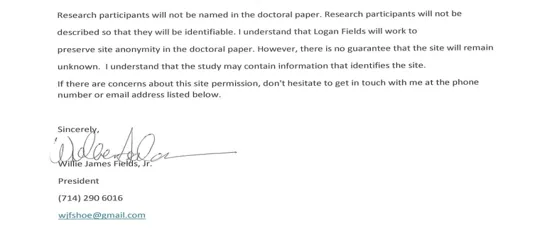
Willie James Fields, Sr., president of the research site, gave conditional permission to pursue the applied improvement project and also provided official site approval for initiating the doctoral project. The signed conditional permission document is attached in Appendix C. Also, permission from the University Institutional Review Board (IRB) is needed to conduct the study. Applied researchers will obtain University IRB approval to commence the study and ensure adherence to the ethical and legal requirements.
References
Atkins, J., Uriostegui, T., Norwood, D. L., & Trache, M. (2023). Social and emotional learning and ninth-grade students’ academic achievement. Journal of Intelligence, 11(9), 185–185. https://doi.org/10.3390/jintelligence11090185
Bailey, R., Raisch, N., Temko, S., Titus, B., Bautista, J., Eniola, T. O., & Jones, S. M. (2021). Innovations in social and emotional learning research and practice: Building from evidence and applying behavioral insights to the design of a social and emotional learning intervention in northeast Nigeria. International Journal of Environmental Research and Public Health, 18(14), 7397. https://doi.org/10.3390/ijerph18147397
Berg, M., Talvio, M., Hietajärvi, L., Benítez, I., Cavioni, V., Conte, E., Cuadrado, F., Ferreira, M., Košir, M., Martinsone, B., Ornaghi, V., Raudiene, I., Šukyte, D., Talić, S., & Lonka, K. (2021). The development of teachers and their students’ social and emotional learning during the “learning to be project-training course in five European countries. Frontiers in Psychology, 12. https://doi.org/10.3389/fpsyg.2021.705336
Bozatlı, L., Aykutlu, H. C., Giray, A., Ataş, T., Özkan, Ç., Yıldırım, B., & Görker, I. (2024). Children at risk of specific learning disorder: A study on prevalence and risk factors. Children, 11(7), 759. https://doi.org/10.3390/children11070759
Dowling, K., & Barry, M. M. (2020a). Evaluating the implementation quality of a social and emotional learning program: A mixed methods approach. International Journal of Environmental Research and Public Health, 17(9), 3249. https://doi.org/10.3390/ijerph17093249
Dowling, K., & Barry, M. M. (2020b). The effects of implementation quality of a school-based social and emotional well-being program on students’ outcomes. European Journal of Investigation in Health, Psychology and Education, 10(2), 595–614. https://doi.org/10.3390/ejihpe10020044
Doygunel, A., & Köprülü, F. (2022). A study of the roles of school administrators in increasing the quality of school life through social responsibility projects in primary schools. Frontiers in Psychology, 13. https://doi.org/10.3389/fpsyg.2022.969638
Dyson, B., Shen, Y., Howley, D., & Baek, S. (2023). Social, emotional learning matters: Interpreting educators’ perspectives at a high-needs rural elementary school. Frontiers in Education, 8. https://doi.org/10.3389/feduc.2023.1100667
Frazier, T., & Doyle, S. L. (2024). Nurturing positive mental health and wellbeing in educational settings – the PRICES model. Frontiers in Public Health, 11. https://doi.org/10.3389/fpubh.2023.1287532
Gimbert, B. G., Miller, D., Herman, E., Breedlove, M., & Molina, C. E. (2021). Social, emotional learning in schools: The importance of educator competence. Journal of Research on Leadership Education, 18(1). https://doi.org/10.1177/19427751211014920
Grant, N., Meyer, J. L., & Strambler, M. J. (2023). Measuring social and emotional learning implementation in a research-practice partnership. Frontiers in Psychology, 14. https://doi.org/10.3389/fpsyg.2023.1052877
Hassani, S., & Schwab, S. (2021). Social-emotional learning interventions for students with special educational needs: A systematic literature review. Frontiers in Education, 6. https://doi.org/10.3389/feduc.2021.808566
Huynh, V. S., Giang, T. V., Nguyen, T. T., & Dinh, D. H. (2021). Exploring the challenges of social-emotional learning integration in secondary schools: A phenomenological research in Vietnam. Psychology Research and Behavior Management, Volume 14, 621–635. https://doi.org/10.2147/prbm.s300748
Kantabutra, S., & Ketprapakorn, N. (2021). Toward an organizational theory of resilience: An interim struggle. Sustainability, 13(23), 1–28. https://ideas.repec.org/a/gam/jsusta/v13y2021i23p13137-d689300.html
Kaspar, K. L., & Massey, S. L. (2022). Implementing social-emotional learning in the elementary classroom. Early Childhood Education Journal, 51(4), 641–650. https://doi.org/10.1007/s10643-022-01324-3
Khatri, S., & Wilde, M. M. (2020). Principles of quantum communication theory: A modern approach. ArXiv. https://doi.org/10.48550/arxiv.2011.04672
Ledezma, A. B., Massar, K., & Kok, G. (2020). Social emotional learning and the promotion of equal personal relationships among adolescents in Panama: A study protocol. Health Promotion International, 36(3), 741–752. https://doi.org/10.1093/heapro/daaa114
Li, Y., Kendziora, K., Berg, J., Greenberg, M. T., & Domitrovich, C. E. (2023). Impact of a schoolwide social and emotional learning implementation model on student outcomes: The importance of social-emotional leadership. Journal of School Psychology, 98, 78–95. https://doi.org/10.1016/j.jsp.2023.01.006
Mahoney, J. L., Weissberg, R. P., Greenberg, M. T., Dusenbury, L., Jagers, R. J., Niemi, K., Schlinger, M., Schlund, J., Shriver, T. P., VanAusdal, K., & Yoder, N. (2020). Systemic social and emotional learning: Promoting educational success for all preschool to high school students. American Psychologist, 76(7). https://doi.org/10.1037/amp0000701
McCoy, D. C., & Hanno, E. C. (2023). Systemic barriers and opportunities for implementing school-based social–emotional learning interventions in low-income and conflict-affected settings. Frontiers in Psychology, 14. https://doi.org/10.3389/fpsyg.2023.1011039
Mondi, C. F., & Reynolds, A. J. (2020). Socio-emotional learning among low-income prekindergarteners: the roles of individual factors and early intervention. Early Education and Development, 32(3), 1–25. https://doi.org/10.1080/10409289.2020.1778989
Nwoko, J. C., Emeto, T. I., Aduli, A. E. O., & Aduli, B. S. (2023). A systematic review of the factors that influence teachers’ occupational well-being. International Journal of Environmental Research and Public Health, 20(12), 6070. https://doi.org/10.3390/ijerph20126070
Permana, A., Purba, H. H., & Rizkiyah, N. D. (2021). A systematic literature review of total quality management (TQM) implementation in the organization. International Journal of Production Management and Engineering, 9(1), 25. https://doi.org/10.4995/ijpme.2021.13765
Ramirez, T., Brush, K., Raisch, N., Bailey, R., & Jones, S. M. (2021). Equity in social emotional learning programs: A content analysis of equitable practices in prek-5 SEL programs. Frontiers in Education, 6. https://doi.org/10.3389/feduc.2021.679467
Roldán, S. M., Marauri, J., Aubert, A., & Flecha, R. (2021). How inclusive interactive learning environments benefit students without special needs. Frontiers in Psychology, 12(1), 1–12. https://doi.org/10.3389/fpsyg.2021.661427
Sandilos, L. E., Neugebauer, S. R., DiPerna, J. C., Hart, S. C., & Lei, P. (2022). Social–emotional learning for whom? Implications of a universal SEL program and teacher well-being for teachers’ interactions with students. School Mental Health, 15(1). https://doi.org/10.1007/s12310-022-09543-0
Shengyao, Y., Xuefen, L., Jenatabadi, H. S., Samsudin, N., Chunchun, K., & Ishak, Z. (2024). Emotional intelligence impact on academic achievement and psychological well-being among university students: The mediating role of positive psychological characteristics. BioMed Central Psychology, 12(1). https://doi.org/10.1186/s40359-024-01886-4
Sinnema, C., Hannah, D., Finnerty, A., & Daly, A. (2021). A theory of action account of an across-school collaboration policy in practice. Journal of Educational Change, 23, 33–60. https://doi.org/10.1007/s10833-020-09408-w
Stevenson, N. A., VanLone, J., & Barber, B. R. (2020). A commentary on the misalignment of teacher education and the need for classroom behavior management skills. Education and Treatment of Children, 43(4), 393–404. https://doi.org/10.1007/s43494-020-00031-1
Takizawa, Y., Bambling, M., Matsumoto, Y., Ishimoto, Y., & Edirippulige. S. (2023). Effectiveness of universal school-based social-emotional learning programs in promoting social-emotional skills, attitudes towards self and others, positive social behaviors, and improving emotional and conduct problems among Japanese children: A meta-analytic review. Frontiers in Education, 8. https://doi.org/10.3389/feduc.2023.1228269
Tiska, A., Dzhaparkulova, A., & Ziernwald, L. (2021). A mixed-methods approach to investigating social and emotional learning at schools: Teachers’ familiarity, beliefs, training, and perceived school culture. Frontiers in Psychology, 12, e518634. https://doi.org/10.3389/fpsyg.2021.518634
Appendix A. Gap Analysis
Process or Activity that Affects Performance | Expected Performance (A) | Current Performance (B) | Performance Gap (A minus B) | Effect of Gap on Organization |
Lack of optimal allocation of financial resources | 90% of the financial resources required for delivering the SEL program | 5% of the resources are not sufficient to deliver SEL | 85% of the resource constraints bring challenges in delivering SEL to students | Poor student academic outcomes |
Lack of staff collaboration | 90% of the staff collaborated to implement the SEL program | 10% of the staff are collaborating to implement the SEL program | 80% lack of staff collaboration hinders the SEL program implementation | Lower student achievement rate. |
Lack of a feedback system | 80% feedback will be provided on the SEL program implementation | No feedback provided (0%) | 80% of teachers do not get any feedback regarding the SEL program | Ineffective student learning environment |
Appendix B. Ishikawa Root Cause Analysis
Appendix C